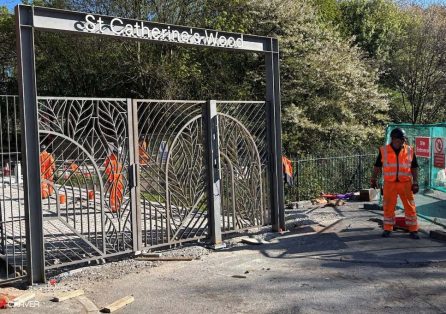
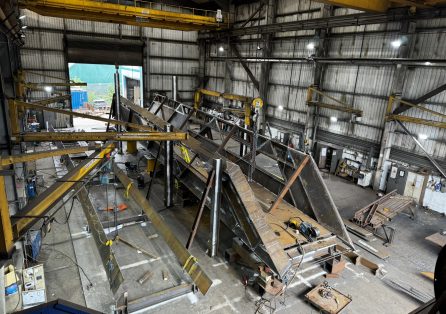
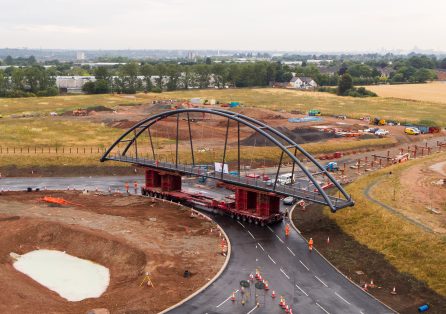
In this article, we’ll walk you through the full journey that our steel projects take through our facility, from consulting on the initial structural concept, through to the logistics of the framework leaving our facility and earning a rightful place in the Carver Engineering portfolio.
1. Securing the project & defining the scope
When working on key steel infrastructure that will serve the nation’s industries, specialist expertise and collaboration is the starting point. Clients such as National Highways or Network Rail will award these major projects to main contractors who act as principal contractors, thus kicking off the scheme.
Then, the scope of the project is assessed, and the main contractors will seek specific work packages from specialists. This is where Carver comes in.
We will tender for the structural steelwork elements of these projects, joining the team after the main contractor has secured the scheme. This allows us to fully align with the project scope and transition into the next phase.
Steel structure design & CAD modelling phase
Careful, detailed planning for steel structures is a crucial early stage of the process. Following initial consultations with fabricators about the scope and specific needs of the project, a detailed architectural design can be drawn up and issued to Carver.
We work with detail designers who use computer aided design (CAD) software to create digital 2D and 3D design drawings. This produces a detailed, intricate, photo-realistic rendering of the structure.

These detailed drawings are extremely valuable to ensure the success of the overall project. By specifying every connection, outlining key dimensions, and ensuring the correct materials are used for load bearing, this ensures that the project remains within budget and saves time on any costly errors. With a clearly and accurately mapped out representation of the structure, project teams can see what they are working towards and what the end result should look like.
By working closely with detailing companies who design CAD models for our steel fabrication manufacturing, we ensure we can see our projects through from concept to successful completion.
2. Structural steel procurement & material delivery
When the designs are approved, it’s time for procurement. At Carver, we take on full responsibility for sourcing everything required for our scope – right from the heavy-duty steel plates and structural sectors that form the backbone of the build, to the finishing elements like anti-slip stair treads and cladding.
However, on some projects, our clients may provide the steel themselves where other companies may not have the capacities to execute the work. With our dedicated steel fabrication workshop and advanced technologies, Carver are able to step in as a trusted manufacturing partner in the project.

3. Material processing
Once we receive the materials we need, usually in stock sheets or bars, it’s time to transform them into the individual components we need for fabrication. This process is known as material processing, with the aim to achieve structural integrity and precision shapes in the final product.
This transformation of materials into crucial components, from beams and columns for structural frameworks to custom components for machinery parts or architectural features, serves as the base for many steel projects.
At Carver’s fabrication facility, we have a range of advanced technologies, including CAD/CAM programmed CNC machines, and 10 tonne cranes. These give us the capabilities to manage all material processing techniques to produce refined steel products.
Plasma cutting
Plasma cutting is used to precisely cut shapes into conductive materials, like steel.
It uses a high-velocity jet of ionised gas known as plasma. A gas (such as compressed air, oxygen, or nitrogen) is heated to the point of electrical charge and high energy in order to produce plasma. After it reaches the proper temperature, it cuts through metal sheets with ease, speed, and accuracy. It is an excellent method for cutting holes, shapes, large steel sheets and intricate components in materials.

Our fabrication workshop’s plasma cutters have the capability to cut mild steel, stainless steel, and aluminium up to 50mm thick while still achieving a precise finish. Our advanced equipment ensures that cuts are accurate, smooth, and ready for the next stage.
Discover more about the plasma cutting process and its advantages and drawbacks in our dedicated blog.
Sawing
Sawing is another way to precisely cut steel materials into their desired size and length. In our facility, we use our own band saws which can cut heavy steel sections, often for bracing and joints.

Bending & shaping
In some instances, elements of a project may require bending and rolling. This could range from bending of plate for cleats to implementing camber into a beam. At Carver we can carry out some bending and shaping of smaller items, but for large pieces we would go out to our trusted supply chain.
4. Joint preparation & material clean up
Following the construction of steel into the precise shapes and structures that the project requires, it’s time for them to be cleaned up and refined. This ensures that the steel joints fuse perfectly together during welding, ensuring long-term structural integrity and durability.
This step involves:
- Grinding: general cleaning of the steel to smooth out sharp edges and rough surfaces, and in preparation for chamfering or adding weld preps.
- Fettling: cleaning and tidying up an almost ready plate or section
5. Tack welding & QA checks
Next is a crucial quality assurance step – tacking up. Tack welding involves making small, temporary bonds on the structure, holding components together ready for the final welding phase.

Then, the steel structure is quality checked against the fabrication design drawings. This ensures that the components are correctly aligned in their exact positions, and the dimensions, angles, and tolerances are accurate to guarantee long-term durability.
Catching a mistake or inaccuracy in this stage is much more manageable than after the final weld. If this happens, we can remove the tack weld and reposition the structure as needed, ensuring that no more time or money is wasted during welding.
6. Structural welding
Once the tacked up structure is verified, welding can begin. This is the process of permanently joining steel components together to form one structure.
Heat from an electric arc melts the steel, which forms a bond between the components as the parent material flows into the joint, creating a strong and durable weld. Common welding techniques include MIG (Metal Inert Gas), TIG (Tungsten Inert Gas), and SMAW (Shielded metal arc welding).
Non-destructive testing (NDT)
For peace of mind that the steel structure is fit for purpose and will last long beyond its designed lifespan, inspections are carried out after welding. We typically carry out Non Destructive testing as it is the least invasive methods that still give critical information about the welding that has taken place these methods, include:
- MPI (Magnetic Particle Inspection): used to detect flaws and cracks in the surface or near-surface of steel components. This checks that the material and welds are structurally sound.
- UT (Ultrasonic Testing): uses high-frequency ultrasonic waves to penetrate the steel. If the waves hit a defect in the material (such as an internal void or crack), it will bounce back and send an alert of the flaw.
- Dye penetrant testing : this method includes applying a brightly coloured dye to the surface of the welded area you are inspecting, removing the excess dye and then spraying a contrast or developer over the top, any defects in the weld even cracks not visible to the naked eye will bleed dye on the contrast showing any defects that need repairing.
7. Final approvals & release
Following the successful weld and pass of all inspections, paperwork is signed off to mark the steel structure being officially approved and cleared for release.
From here, the structure is transported to external specialists for surface treatments. As per the project and client’s specifications, the likes of primer coats, painting, zinc galvanising, and powder coatings, are applied. Whether the steel structure is headed to a corrosive marine environment, or a tough mining site, these surface treatments will guarantee the steel won’t rust, prolonging its lifespan for decades to come.

Partner with a specialist in structural steel fabrication
From the moment we secure a new steel project, to the final logistical arrangements for on-site delivery, the journey of steel through Carver is defined by precision and uncompromising quality control. We are driven by our commitments to upholding our ISO standards for steel fabrication and meeting the project scope every time.
Whether you are delivering a major infrastructure scheme for the railway, highway, energy, mining, or marine sectors, you need a manufacturing partner you can trust. We have the facilities, expertise, advanced technologies, and proven track record to execute your vision safely, on time, and within budget.
Contact the expert team at Carver to discuss your scope and discover how our workshop capabilities can bring your next steel project to life.