Bridges play a key role in today’s infrastructure. Whether they’re above railway lines or busy highways, used by pedestrians or vehicles, they are critical for keeping people and businesses moving. Due to their significance and frequent use, it is crucial that they are fabricated precisely, efficiently, and safely.
To get this reliable and secure structure correct the first time, and ensure its longevity, is an intricate process. Many complexities arise, and can vary from project to project.
In this blog, we’ll uncover some of the complications and logistical technicalities that come with precise bridge fabrication, and how we aim to solve them. We’ll also share real-world examples of how we at Carver Engineering deliver these complex projects and resolve any issues that occur during their build and installation.
Here are the three areas of steel bridge fabrication projects that may have complexities that we can assist with.
1. 3D drawings and detailing
Before the steel fabrication of bridges can even begin, there is plenty of meticulous planning to be done, ensuring that the bridge is structured correctly. 3D architectural drawings are completed once the scope and needs of the project are outlined. These drawings will accurately represent the bridge structure, outlining:
- All relevant and accurate dimensions
- Every connection
- All material requirements
These elements must be done in accordance with the project specifications, load capacities, and all relevant standards.
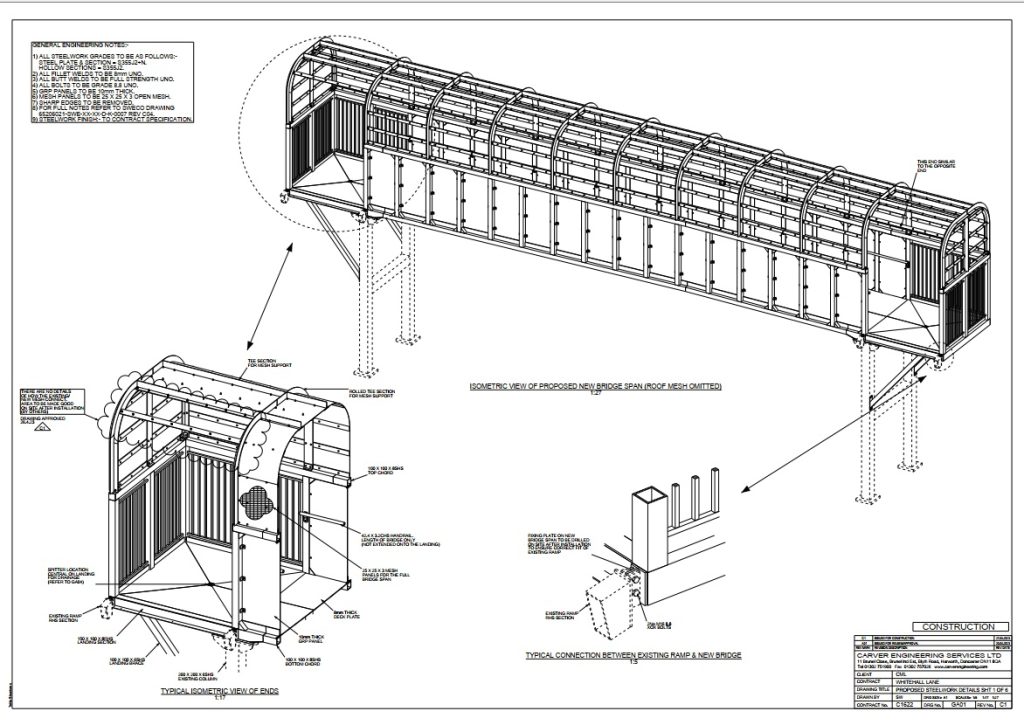
Architectural drawings then serve as the basis for the structural steel detailing process, which translates these designs into practical instructions for the fabrication of the project. However, this is where some issues arise.
If there is ever a mistake or oversight from simple human error during the detailing, this follows through into the drawings. These mishaps can cause discrepancies and complications with the build instructions. This can cause issues with the structure being built, and can impact the integrity of the final results of the steel bridge.
Errors within fabrication drawings that occur during detailing can be costly and even halt the project until a solution is found. This could affect the overall project timeline and threaten strict deadlines that the project team is set to achieve.
Our solution
At Carver Engineering, we review and approve drawings before they enter the fabrication stage. Catching any issues early on can save time and money in avoiding any reworks.
As some issues and discrepancies may only occur once fabrication has begun, our foreman will report any findings which may temporarily put the job on hold whilst we seek out the best way to move forward.
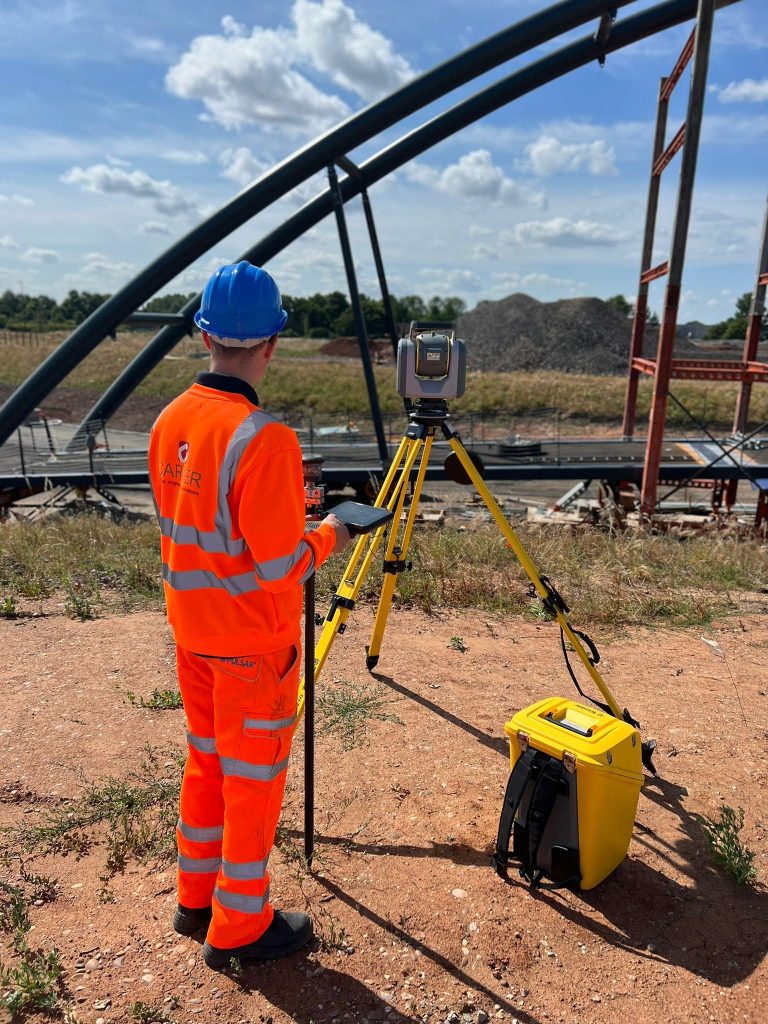
Alongside the checks carried out by our fabrication inspector, certain projects require additional inspection. At Carver, we use a Total Station – a high quality surveying tool that is used to accurately measure many angles, distances, elevations, and key dimensions.
This piece of technology allows our team to catch and resolve discrepancies instantly, keeping the project on track, and the final structure safe and built to outlined specifications.
2. Weld distortion
Although a detailed 3D model may look perfect, fabrication to bring it to life can be a different story.
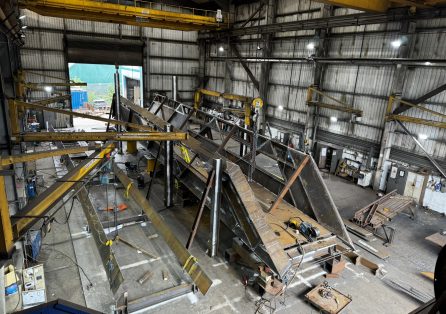
In our steel fabrication workshop, we complete essential welding techniques used to fuse steel components together, creating the permanent structures required for bridge construction. We most commonly utilise MIG (Metal Inert Gas)
However, the intense heat of the welding process can naturally distort the steel. This is known as weld distortion, and occurs from the heating and cooling cycle of this process. The fluctuation in temperatures, as well as movement of the steel structures both during welding and after cooling, can cause the material to warp.
Distortion, even just minor ones, can throw off the tolerances established during the detailing and design drawing phases. This can impact the entire bridge construction, compromising both its integrity and its alignment with the project scope and specifications.
Weld distortion is an issue for bridge structures that rely on precision for long-term safety and stability for supporting the movement of people, vehicles, and goods.
Our solution
To mitigate the risks of natural distortion from steel welding, our dedicated team continuously monitors the process and keeps a close eye out for any changes in the material.
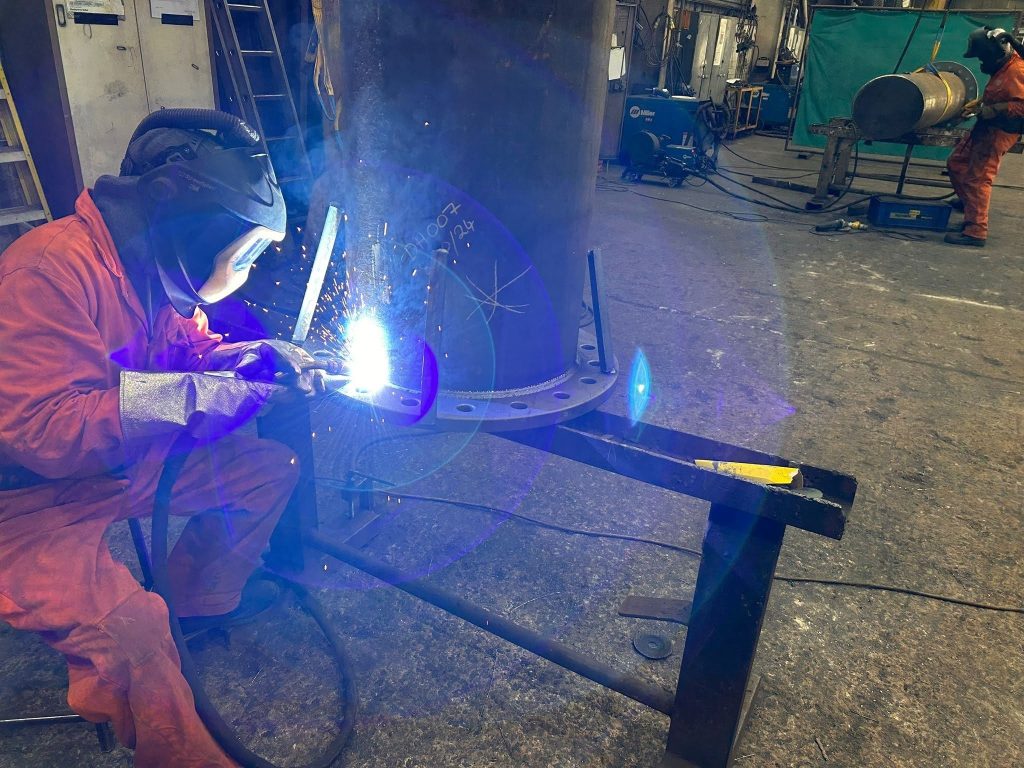 Our skilled engineers will take immediate corrective actions where necessary to manipulate the steel back into absolute structural integrity and tolerances. This includes:
-
- Flame straightening, also known as thermal rectification. This works by heating a localised area of the distorted steel to pull the material back into perfect alignment.
- Mechanical straightening. For thicker structural elements that have been warped out of shape, applying physical force with heavy equipment, such as hydraulic presses or specialised rollers, can help to move them back to strict tolerances.
- Optimised welding sequences. Altering the direction and order of the welds evenly distributes the heat, minimising the effects of the temperature fluctuations and resulting distortions.
3. On-site logistics
Once the steel bridge components are fabricated and completed in our workshop, it’s time for them to move to their site for final assembly and installation.
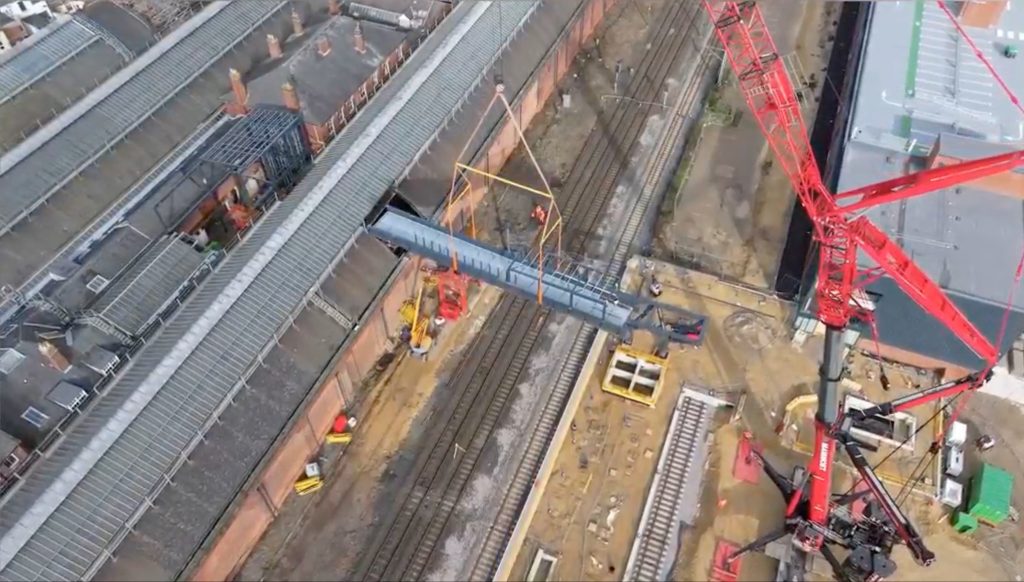
This is an element that varies project by project. However, the priorities of this phase always remains the same – the structure must be moved on time, safely, within budget, and as efficiently as possible.
Especially for steel bridges that span over live railway lines or busy motorways, possession timeframes can cause huge pressure on the delivery deadlines and coordination. If these deliveries are late or a lift is missed during a strict night closure, the project can face catastrophic delays waiting for a new possession date.
Our solution
While Carver uses external transport and equipment, it is our project managers who meticulously plan the entire operation. From organising the haulage and cranes, to arranging a precise timeline for the day the components leave our workshop, they are in charge of us avoiding any disruptions.
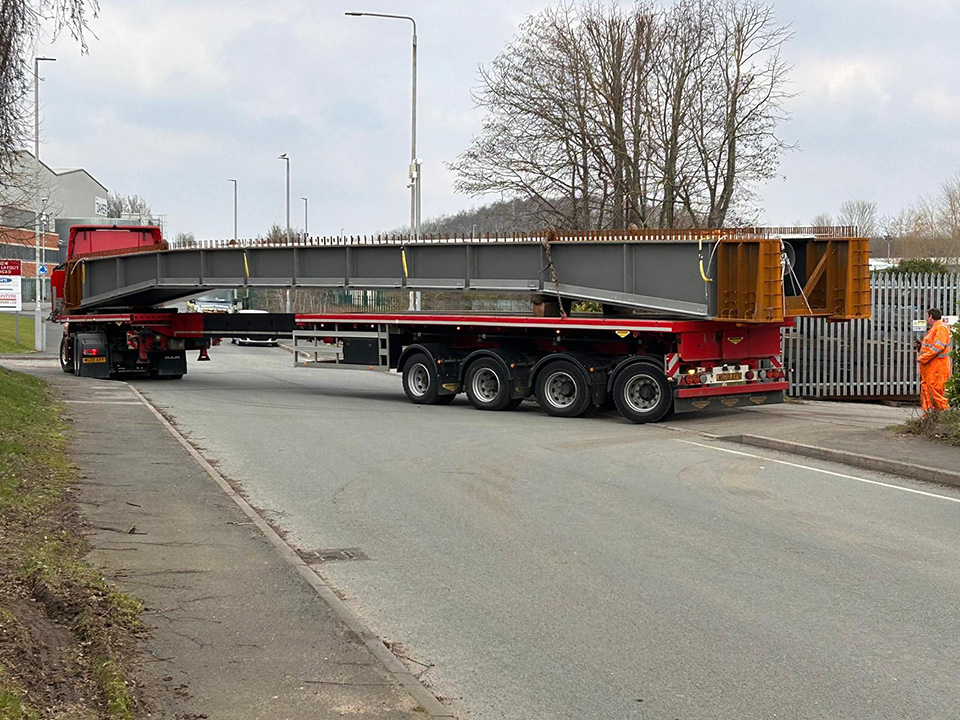
They will also work around the organisation tied to time-sensitive projects that require minimal delays. This includes ensuring deliveries make it to the site on time, organising police escorts on the road, crane access, and coordinating lift plans.
At Carver, we also utilise trial erections to test-run the assembly of the bridge’s components ahead of the on-site installation. This test identifies any discrepancies or flaws that can be fixed ahead of the final site erection, reducing the need for any reworks, delays, or construction errors that could otherwise impact those critical delivery timelines.
Carver’s bridge fabrication solutions in action
Let’s take a look at some of our responses to common complications in steel bridge fabrication projects across the UK. Our projects showcase our ability to deliver accuracy, reliability, and safety with every bridge structure.
Peddimore Footbridge, Birmingham
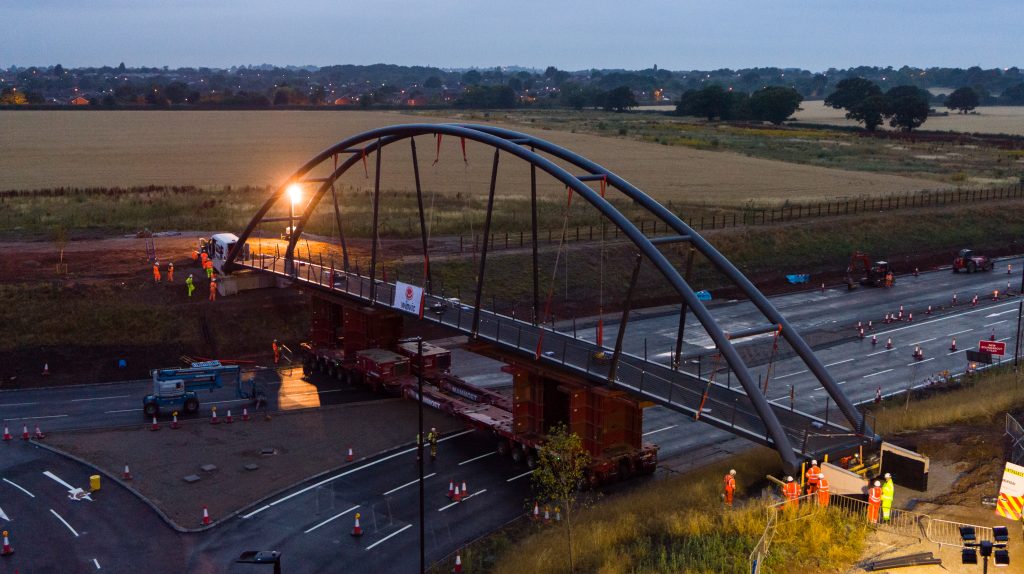
At an impressive 60m long, 6.5 metres wide, and weighing 90 tonnes, this arch footbridge highlighted our ability to expertly tackle extremely tight deadlines.
As this bridge was scheduled for delivery during the Commonwealth Games (which took place only eight miles away from the site), a short three-week road closure embargo was imposed. In this time, we had to transport the components, assemble them, and tandem lift the heavy structure. This project also took place during extreme weather conditions.
To overcome these difficulties, our project managers, in collaboration with Winvic, had to act quickly and accordingly. Schedules were adjusted, moving key installation processes to early morning shifts in order to maintain productivity and avoid the heat.
Peddimore Footbridge was completed ahead of schedule, and is now an excellent example of our expertise in handling precision installation in the face of complex logistics and time constraints.
Darlington Railway Station Footbridge, County Durham
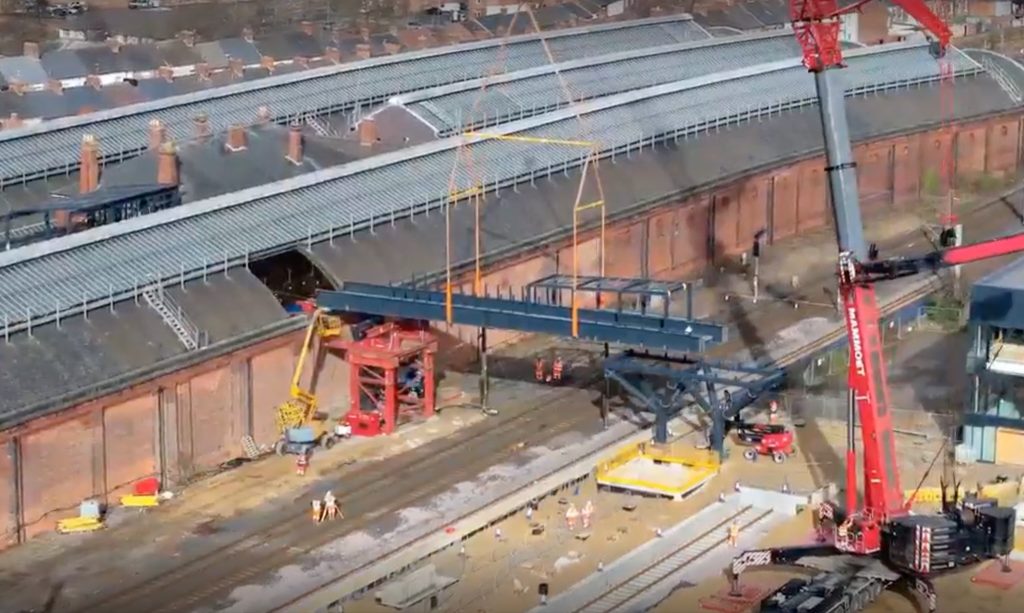
In October 2024, Carver Engineering were contracted to complete a new pedestrian footbridge at Darlington Railway station, improving passenger access over the railway infrastructure, and increasing station capacity.
As the railway station was still in daily operation, this meant that the lifts, assembly, and installation works had to be arranged to take place during overnight possession working hours. This kept the station running for passengers and train services, and meant that we could complete our works safely without interruption.
To keep the project in line with these timeframes, we arranged for over 90% of the works to be completed off-site at our fabrication workshop in Doncaster. This enabled us to meet the completion deadline by May 2025. Over 1,590 tonnes of steel were used across the station to deliver improved rail services and modern accessibility routes for passengers.
Three Arches Bridge, Leicestershire
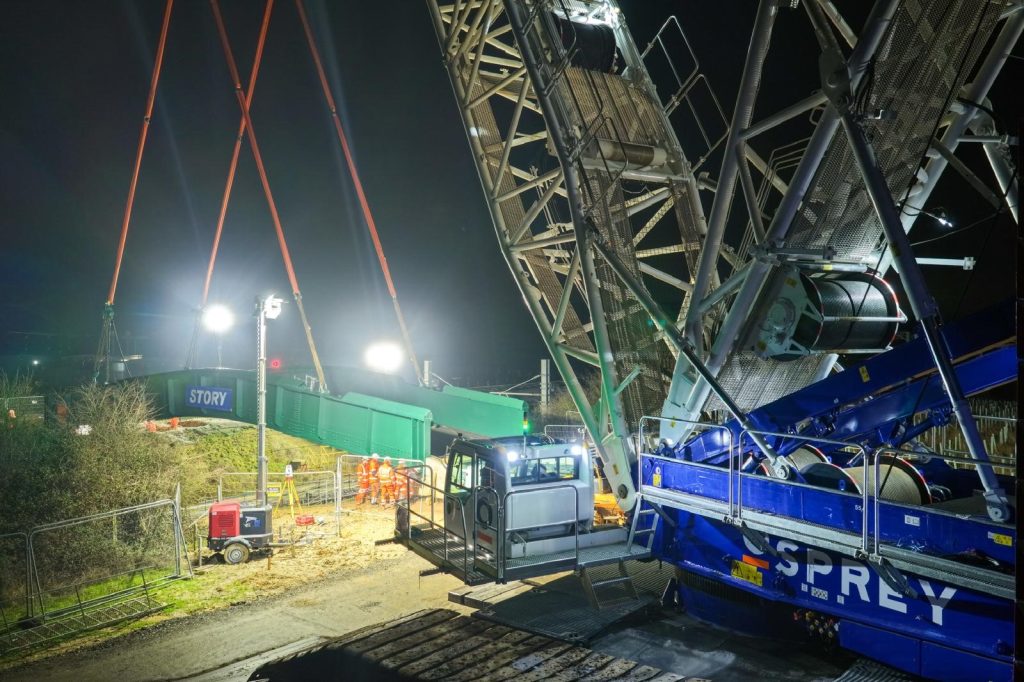
Following the demolition of the original structure in 2024, we joined the programme to fabricate a new 140-tonne asymmetrical steel arch bridge over the Midland Main Line railway in rural Leicestershire. Because the bridge spans a major railway line, this meant that our work had no room for error to ensure safety when working over a live railway line.
This bridge was also expertly designed and fabricated to the exact specifications for overhead line equipment clearances, supporting the long-term electrification ambitions for the rail service.
Working in collaboration with Story Contracting, we completed the project in early 2025, following four months of on-site preparation and full assembly. The final installation of the steel bridge was executed during a strict weekend night possession window, where the structure was lifted piece by piece into position using a 650-tonne crawler crane.
Partner with Carver for your next bridge fabrication project
We have been delivering high-quality bridge steel fabrication solutions across the UK for over 30 years, continually proving our ability to overcome logistical and technical engineering challenges.
Whether the project specification is time-sensitive, or may lead to some complications during the fabrication process, our team has the knowledge and capability to deliver fantastic results every time.
Get in touch today to discuss your next successful bridge fabrication project with us.