For massive steel infrastructures that keep key industries running, there can be no room for small mistakes. Every project demands expert knowledge, precision engineering, and skilful accuracy. To ensure these crucial structures are built to last and engineered for success, a trial erection must be conducted.
This is a vital process in steel fabrication, ensuring a smooth installation and successful outcome for your steel structures.
In this article, we’ll explore the role of trial erections, how they help to streamline fabrication projects, and why it is crucial for the railway, marine, and highway sectors.
What is a trial erection?
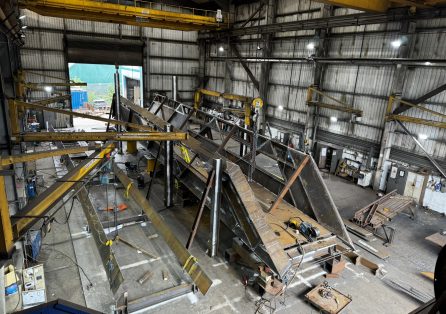
In steel fabrication, a trial erection is the process of test-running the assembly of structural components in a controlled environment (such as a workshop or facility) ahead of the on-site installation. It is also known as a test assembly or mock-up.
This procedure involves using General Arrangement and detailed drawings to assemble the components into a complete structure. The use of 3D models can also be used as a visual check. Much like in a steel erection process on site, the trial will involve lifting, positioning, and securing key connections needed in the structure.

Once it is fully assembled, the fabrication team will visually inspect the steel structure to ensure it matches the drawings and meets project requirements and outlines. From there, the combined assemblies will be disassembled ready to be transported for surface treatment.
There are many other benefits that come with this necessary procedure, including:
- Identifying any discrepancies or flaws that can be fixed ahead of the final site erection
- Reducing the need for any reworks, delays, and construction errors to the fit and assembly of the structure during real on-site erection
- Improving overall efficiency of the production process
Overall, these factors help to guarantee that the project is delivered on time and within budget. Trial erections for steel fabrication projects are a necessary process for especially complex and challenging sectors, especially for those with tight deadlines and unique requirements.

Let’s explore some real-life examples of how Carver’s trial erection procedures in the railway, marine, and highway sectors came in especially useful.
Trial erections in railway infrastructure
Steel pedestrian footbridges and walkways form a crucial part of the UK’s railway stations, keeping pedestrians connected to platforms and allowing them to easily access the public transport.
With these stations seeing heavy foot traffic and regular everyday use for commuters and pedestrians alike, steel structures need to be assembled correctly the first time, and to a particular timescale. This is why trial erections are an essential aspect in the railway sector, helping to avoid work disruptions, ensuring the end result’s safety requirements, and keeping the project delivered on time.
Barmouth Railway Viaduct
Barmouth viaduct is a single-track wooden railway bridge 900 yards long across the estuary of the River Mawddach in Wales. As a 150 year old Grade II listed bridge, the works done for this structure required precision assembly with no room for errors.
There were many logistical challenges and requirements involved in this project. This includes working meticulously to maintain the appearance and protect the historical significance of the bridge. Our team also had to face working on a site with limited access over water.
A trial erection for this project was an undisputed essential procedure. This would ensure there were no flaws, the end result would be a stable structure built for longevity, and that it maintained the same significant historical feel of the original bridge.
With our many years of experience and knowledge in the industry (along with some assistance from our top of the range surveying equipment), the full trial assembly at our Doncaster facility included four spans using purpose-made and reusable temporary works stools. We also dismantled the spans into sub-assemblies ready for painting.
Running through a test erection guaranteed that the final structure was within tolerance to how it would sit in its final position on site. To maintain the look of the original structure, we used fake studs during the trial erection and fabrication process.
Installation of critical assemblies, such as VIPA, VOSSLEH, and GUARD RAIL, was a key stage on the deck. Their height was critical as they would support the new rail track. To enhance pedestrian safety, we also fabricated and installed a bespoke, full-length handrail system along the bridge.


Trial erections in marine infrastructure
In the marine industry, the harsh conditions of coastal environments create unique demands for its infrastructure. Robust steel structures must meet stringent precision and safety requirements to ensure they can withstand tough weather and abrasive materials while performing their intended jobs.
For these reasons, a trial erection for marine infrastructure is a critical process. This ensures assemblies are done within tight tolerances, and that the structure is quality engineered to combat the pressures of the setting.
Port of Tilbury Hopper
Carver joined a project with Spencer Group to fabricate a bespoke hopper at the Port of Tilbury in Essex. This was designed with the aim to increase the port’s offloading capacity up to 4,000 tonnes of granite stone per hour.
Due to the aim of the hopper to efficiently break up and handle abrasive materials, both the type of steel and structure design needed to be spot on the first time around. This would ensure the structure’s longevity in a demanding marine environment and that downtime was kept to a minimum with an effective structure that got the job done.
To meet these requirements, the hopper was fully fabricated and trial assembled at our Doncaster facility including the AR450 internal liner plates – a grade utilised in the marine industry for its exceptional hardness, resistance, and long lifespan. This step allowed our team to refine the design and ensure the hopper’s structural integrity before on-site installation.
Trial assembly ensured fast and efficient fabrication for reduced disruption at the port. The hopper and its supporting steelwork were delivered in modular sections for a streamlined installation process.


Trial erections in highway infrastructure
UK highways are a critical part of the transportation sector, with bridges for pedestrians and vehicles, guardrails, toll booth canopies, foundational structures and more keeping the nation connected.
Due to the key purpose of these structures, they often see very heavy traffic and frequent daily use. To be built for purpose, highway infrastructure should be heavy-duty, long-lasting, and well-designed for structural integrity to hold the daily weight and friction of vehicles.
As such a key part of the nation, highway bridges should also be fabricated and installed on-time and with minimal disruption. This is where trial erections come in handy to keep the project moving on time and installed accurately the first time to prevent delays.
White City Imperial College Overbridge
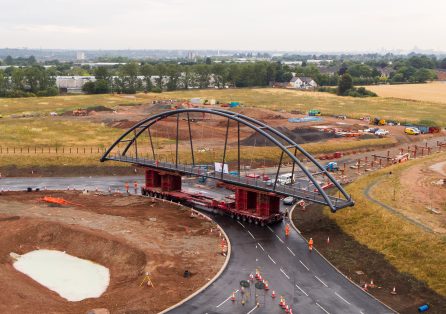
To connect various facilities while providing more pedestrian and highway traffic access at the Imperial College campus in London, we lent our expert hand in the White City overbridge project. The bridge stands at 25 metres long and is a critical piece of infrastructure for both the college and local connections in such a busy area of the city.
The challenge in this project was getting the bridge precisely fabricated and installed during scheduled possession hours and with utility integrations. As an integral addition to the college campus, it was also essential for the bridge to be accurately aligned and suitably installed for guaranteed longevity and precision. To speed things up and ensure that there were no costly errors or misalignments, we completed over 60% of the work off-site, including a critical trial erection.
Our trial erection of the bridge’s eight braces plate girders, soffit panels, and secondary steelwork ensured every part of the structure was the correct measurement, fitted correctly, and delivered to precise requirements. We also pre-installed utilities at our facility, which streamlined the process even further to ensure fewer activities on-site.


Start your next project with Carver
At Carver, we operate with a focus on efficient processes, quality outcomes, and precision engineering to fabricate steel structures that can effectively stand the test of time. By utilising trial erections, we can ensure that risks are appropriately mitigated, the infrastructure is aligned and structurally intact, and that the unique demands of particular sectors and environments are effectively met.
If you’re looking for an experienced fabrication engineer who delivers reliability, durability, and quality with effective trial erections that provide quality outcomes in steel structures, get in touch with our team today.